
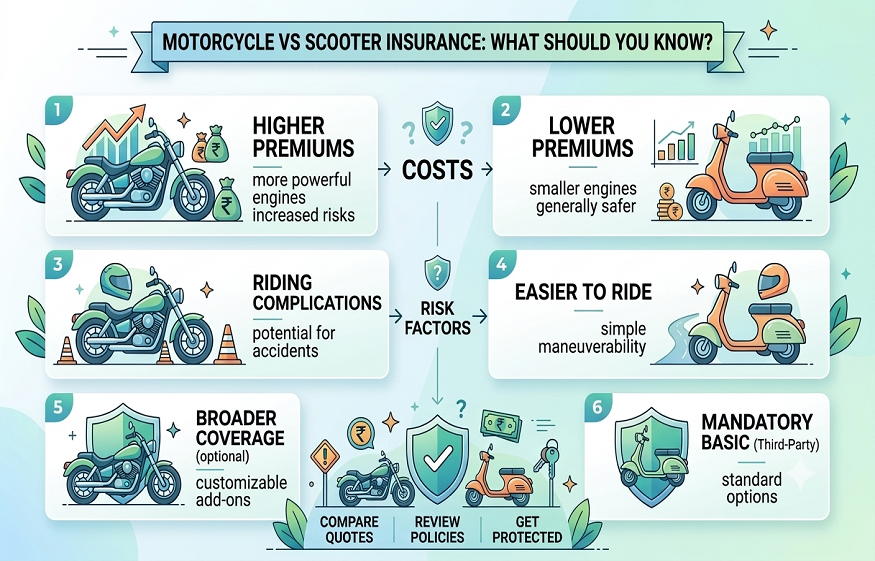
For many Indians, a two-wheeler is more than just a mode of transport. Motorcycles and scooters make daily commuting easier, help navigate busy city roads and can be more economical than a car. But while both fall under the broader category of two-wheelers, their insurance needs can differ depending on how the vehicle is used, its value and the risks involved.
Understanding the difference between motorcycle and scooter insurance can help you choose appropriate coverage instead of simply selecting a policy based on its premium.
Is Motorcycle and Scooter Insurance Different?
At a fundamental level, motorcycle and scooter insurance work on similar principles. Both require valid third-party insurance to legally ride on Indian roads. Depending on your requirements, you can also choose a standalone own-damage policy or a comprehensive policy that combines third-party liability with protection for your own vehicle.
The main difference is not necessarily the type of insurance policy available, but the factors that influence the premium and the level of coverage that may make sense for your vehicle.
The insurer may consider factors such as the vehicle’s make and model, engine capacity, age, insured declared value (IDV), location, usage and claims history when determining the premium.
What Does Two-Wheeler Insurance Cover?
Before comparing motorcycles and scooters, it is useful to understand the main types of two-wheeler insurance.
Third-party insurance covers your legal liability if your two-wheeler causes injury, death or property damage to a third party. It is mandatory under Indian motor insurance regulations.
Standalone own-damage insurance protects your motorcycle or scooter against specified risks such as accidents, theft, fire and certain natural or man-made events, depending on the policy terms.
Comprehensive insurance generally combines third-party liability coverage with own-damage protection. For riders who want broader financial protection, comprehensive motorcycle insurance can help cover losses arising from accidents, theft and other covered events.
Remember that the exact coverage, exclusions, deductibles and conditions vary between policies, so checking the policy wording is important before purchasing.
Motorcycle Insurance: What Should Riders Consider?
Motorcycles are often used for longer commutes, highway journeys and performance-oriented riding. Some models also have higher purchase prices and repair costs than conventional scooters.
If you own a motorcycle, consider whether your insurance provides adequate protection against:
- Accidental damage
- Theft
- Fire and related risks
- Natural calamities
- Third-party liabilities
- Damage caused during covered incidents
If your motorcycle is relatively new or expensive, a comprehensive policy may be worth considering because repairing or replacing components after an accident can be costly.
You can also evaluate optional add-ons based on your circumstances. For example, zero depreciation cover may be useful for eligible vehicles if you want to reduce the impact of depreciation deductions on certain claims. Other add-ons may provide protections such as roadside assistance or engine-related coverage, subject to policy terms and eligibility.
Scooter Insurance: What Makes It Important?
Scooters are particularly popular among urban commuters because they are convenient for short-distance travel and everyday errands. Their usage pattern, however, does not mean insurance is less important.
Scooters can be exposed to the same road risks as motorcycles, including collisions, theft, flooding, accidental damage and third-party liabilities.
For a scooter owner, the right insurance policy should reflect the vehicle’s value and usage. If the scooter is used frequently for commuting, broader coverage can provide greater financial protection against unexpected repair costs.
Owners of newer or higher-value scooters may also consider comprehensive coverage rather than relying only on mandatory third-party insurance.
Motorcycle vs Scooter Insurance: Is One More Expensive?
There is no universal rule that motorcycle insurance will always cost more than scooter insurance, or vice versa.
The premium can depend on several factors, including:
- Engine capacity
- Vehicle’s age
- Model and variant
- IDV
- Location
- Claim history
- Policy type
- Selected add-ons
- Voluntary deductible
A high-performance motorcycle, for example, may attract a higher premium because of its value, engine specifications or potential repair costs. Similarly, an expensive premium scooter can also require substantial insurance coverage.
Therefore, comparing policies based only on whether you own a motorcycle or scooter may not give you the complete picture.
How Should You Choose the Right Two-Wheeler Insurance?
Instead of choosing the cheapest policy available, consider the protection you actually need.
Start by checking whether the policy provides mandatory third-party liability coverage. Next, assess the value of your vehi cle and how frequently you use it. If you depend on your two-wheeler for daily commuting, consider whether own-damage protection would provide meaningful financial security.
You should also compare deductibles, exclusions, claim procedures, network garages and applicable add-ons. A slightly higher premium may be worthwhile if the policy offers significantly more relevant protection.
Also check your No Claim Bonus (NCB) eligibility when renewing an eligible policy. A claim-free record may help you receive a discount on the own-damage component of the premium, subject to applicable terms.
Don’t Forget Policy Renewal
Having insurance is not enough; keeping it active is equally important. Riding with an expired policy can expose you to legal and financial consequences.
Set a reminder before your renewal date and review your coverage rather than automatically renewing the same policy every year. Your vehicle’s age, value, usage and insurance requirements may have changed.
Whether you ride a motorcycle or a scooter, the goal of insurance is the same: to reduce the financial impact of unexpected events on the road.
The Bottom Line
Motorcycle and scooter insurance may look similar, but the right policy depends on your vehicle, riding habits, financial exposure and coverage requirements.
Mandatory third-party insurance provides essential legal protection, while own-damage and comprehensive policies can offer broader financial protection. If you own a newer or higher-value motorcycle, comprehensive motorcycle insurance may be worth evaluating. Scooter owners can similarly consider comprehensive coverage when the potential cost of theft or accidental repairs justifies broader protection.
Ultimately, don’t choose insurance solely based on the lowest premium. Look at the coverage, exclusions, deductibles, add-ons and claim-related terms to determine whether the policy provides the protection you actually need.