
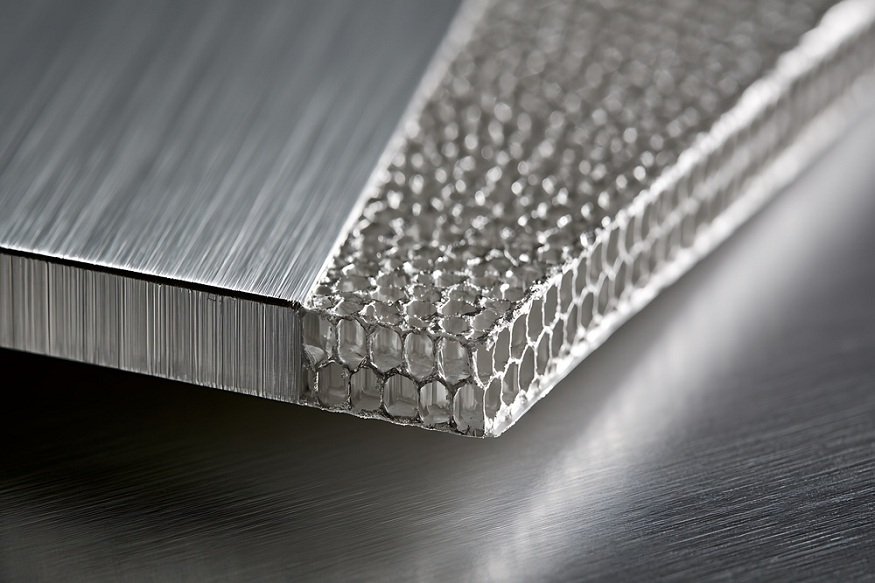
Aramid paper immersed in phenolic resin is as thrilling as a boring filing cabinet. But that boring compound is used in cabin sidewall panels, rotor blade skins, radar dome covers, and racecar flooring to do jobs where aluminum would fail. Strength is not the issue here. Everything else about aramid based cores is.
Rust Never Enters the Picture
Aluminum core faces one very annoying drawback. The process of galvanic corrosion is happening under the surface, mostly around carbon fiber joints, where salty damp air is present. From the outside, the panel looks pristine, but on the inside, the structure breaks down. Aramid does not take part in this process because it is not metal at all. For aircraft flying close to sea or dealing with salty spray, this trait alone is crucial.
Fire Rules are Brutal, and it Passes
It’s difficult to picture fire regulations being more stringent anywhere than on an airplane, where every precaution is crucial. Any panel must withstand fires and emit minimal heat. It must prevent the production of dense smoke or harmful gases during a fire. Phenolic-coated aramid meets all these requirements, and that is why it is used in galleys, lavatories, ceilings, and overhead bins. Instead of melting, resin chars. This charred layer prevents further spread of the heat, and that fact becomes critical for people trying to escape.
Read More: Yext SEO Benefits for Local Brand Authority and Trust
Signals Walk Right Through
Since aramid honeycomb is transparent to radar and radio signals, it is the obvious choice for radomes and antenna constructions. Stiffness remains, shape stays preserved, and the signal is transferred through the panel seamlessly. Nose radomes, reflector backing on satellite dishes, ground antenna housings. Create any of these from metal core and congratulations, you have yourself an expensive mirror.
Dents, Shudder, and Daily Abuse
Aramid cells are flexible enough to withstand deformation, and they are less prone to permanent damage from dents. If you drop a wrench on an aluminum core panel, a crease will appear which will never heal. Aramid will likely return to its initial state. This feature benefits rotor blades and control surfaces most because of the constant vibrations and accidents in hangars. The core helps reduce noise and shudder, making the cabin slightly quieter.
Density You Can Dial In
Generally, grades range from 1.5 to 9 pounds per cubic foot, enabling engineers to order only the necessary core and nothing more. The lightest grades are used in panels of interior surfaces carrying light loads. Denser grades can handle floors and structural components. Formability is also good. Applying some heat and pressure, aramid can be draped around complex geometrical shapes that would require crushing or splicing of other cores.
Consistency Is Key Factor
The quality of the core is hidden in unglamorous details. Resin coating applied evenly, cell walls holding their dimensions, ribbon direction clearly marked, edges cut clean. Manufacturers collaborating with one of the best honeycomb core manufacturers, Axiom Materials, get reliable aramid cores, and matched adhesives and prepregs for bonding which provide predictable behavior of bonded assemblies. The bonding will decide the fate of your construction. Adhesive must cover the whole surface of each cell wall leaving a tiny fillet against the skin, and it happens only in case of core with consistent geometry.
Read More: Is It Time to Switch Your Current B2B Marketing Agency?
Where it Falls Short
Aramid is more expensive than aluminum. The exposed cells absorb moisture easily. At the same density, aluminum is superior in terms of compressive strength.
Conclusion
Aramid core stands out due to its ease of use. Lightweight, noise-proof, flame-resistant, radar-transparent, rust-proof. Usually, it is not the strongest option on the list. But very often it is the most sensible choice.